
✈️ UAE · UNITED ARAB EMIRATES
Al Ain International Airport (AAN): A Quiet Desert Gateway Serving the UAE’s Garden City
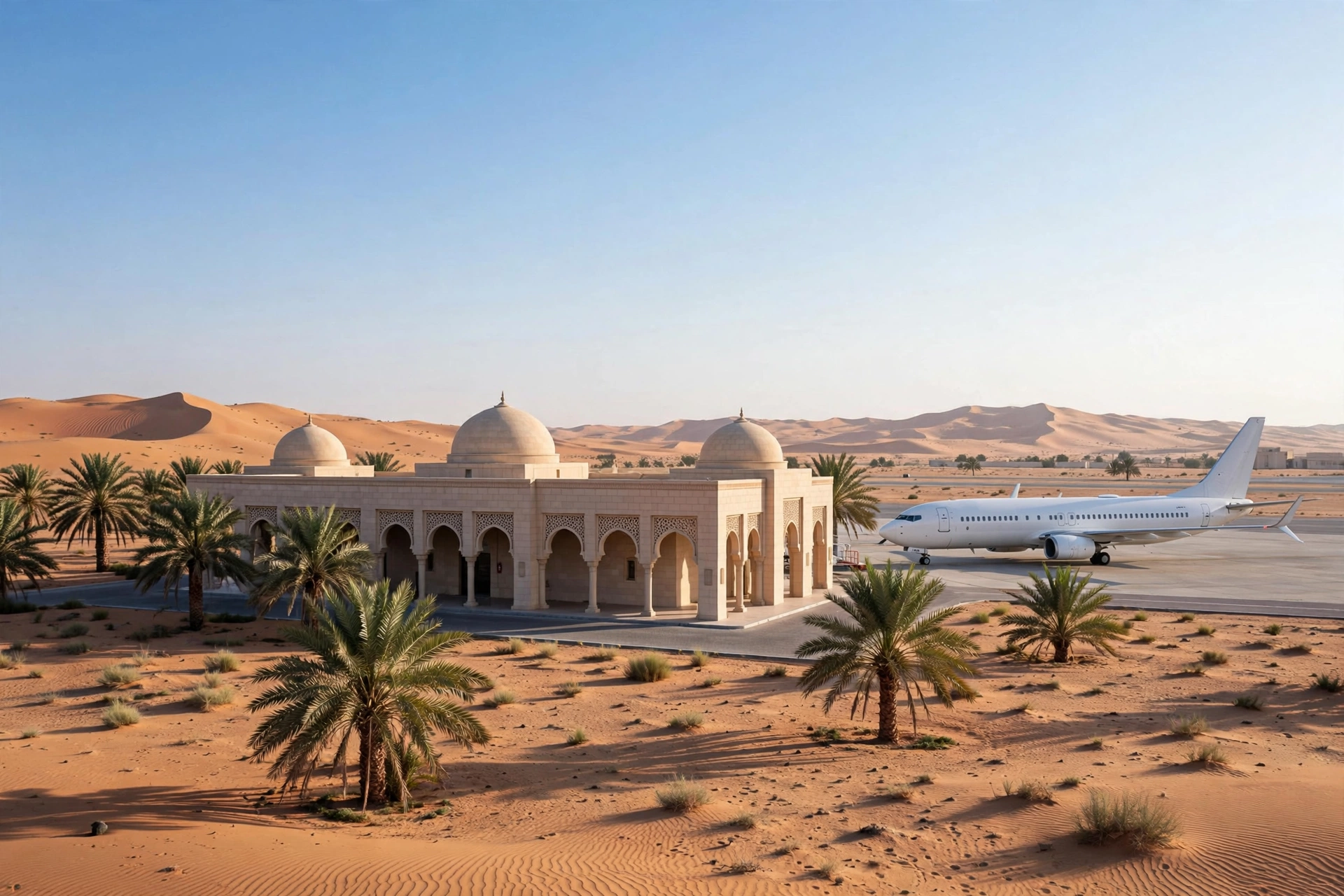
Al Ain International Airport (IATA: AAN, ICAO: OMAL) serves Al Ain, the inland oasis city known across the Emirates as the “Garden City” for its palms, parks and historic forts. Set in the desert about 18 kilometres north-west of the city centre, the airport has a long 4,000-metre runway, a small and peaceful terminal, and a role that blends limited passenger services with aerospace industry, training and cargo. Honesty matters here: scheduled passenger flights at Al Ain have been few and intermittent in recent years, and most Al Ain residents fly from Abu Dhabi (about 1 hour 30 minutes away) or Dubai (1 hour 30 minutes to 2 hours). This guide explains what AAN offers today, its history and industries, and how to check whether any passenger service is operating when you plan to travel.
Al Ain International Airport
Official name
AAN
IATA code
OMAL
ICAO code
Desert north-west of Al Ain, A
Location
Al Ain itself deserves the journey regardless of how you arrive: a UNESCO-listed oasis, the birthplace of Sheikh Zayed, and home to Jebel Hafeet, the UAE’s second-highest peak. Its airport is part of the Abu Dhabi Airports family, sharing systems and standards with Zayed International Airport.
Key Facts
| Official name | Al Ain International Airport |
| IATA code | AAN |
| ICAO code | OMAL |
| Location | Desert north-west of Al Ain, Abu Dhabi Emirate |
| Distance to city centre | Around 18 km — about 20 minutes by road |
| Operator | Abu Dhabi Airports |
| Terminals | 1 small passenger terminal |
| Runways | 1 runway: 01/19, about 4,000 m |
| Passenger services | Limited and intermittent in recent years — always verify live before planning |
| Opened | 1994 |
✈️ Al Ain International Airport at a Glance
- Small, quiet airport for Al Ain, the UAE’s historic oasis “Garden City”
- A full-size 4,000 m runway despite very light passenger traffic
- Scheduled passenger flights are limited and intermittent — most locals use Abu Dhabi or Dubai
- Real strengths: aerospace manufacturing (Strata), flight training and cargo
- Around 18 km from the city centre, with easy surface parking at the terminal
Terminals
AAN has one small passenger terminal, opened with the airport in 1994, handling check-in, departures and arrivals under one roof. The scale is intimate: a handful of check-in desks, a compact departures area and a short walk to the aircraft — a world away from the mega-terminals an hour and a half down the motorway. Facilities are sized for the airport’s actual traffic, which in recent years has meant far more training, cargo and technical movements than scheduled passenger flights. When seasonal or charter passenger services do operate, processing is quick and personal. Plans to expand Al Ain’s passenger role have been discussed over the years in step with the city’s growth, but today the terminal remains one of the quietest international gateways in the country.
Parking
Parking is surface parking immediately outside the terminal, with space far exceeding everyday demand and charges that are minimal by UAE hub standards — for much of the airport’s life, short-stay parking has effectively been free or close to it, reflecting the light traffic. There is no pre-booking, no multi-storey maze and no shuttle: you park, and you are at the door in a minute. As with all smaller airports, confirm any current charges on the Abu Dhabi Airports website or on arrival, and if you are leaving a car for an extended period while flying from Abu Dhabi or Dubai instead, compare the long-stay rates at those airports, which may suit the trip better.
Getting To and From the Airport
The airport is reached by road from Al Ain in about 20 minutes; taxis serve the terminal when flights operate, and driving is simple on the motorway-standard roads north-west of the city. Car rental is widely available in Al Ain city. The practical alternative airports are well connected: Abu Dhabi (AUH) is roughly 140 km — about 1 hour 30 minutes — and Etihad has long operated coach connections between Al Ain and its Abu Dhabi hub for ticketed passengers; Dubai (DXB) is around 130 km via the E66 Dubai–Al Ain Road, about 1 hour 30 minutes in free-flowing traffic. Intercity buses link Al Ain with both cities for budget travellers, with a local taxi at either end. There is no rail service to Al Ain at present.

Facilities and Services
Within the terminal you will find the basics done in Abu Dhabi Airports style: check-in and information desks, seating areas, a café, prayer facilities and a small duty free offer when passenger services operate. The airport’s wider campus is where the interesting activity is: Strata Manufacturing, which builds composite aircraft parts for Airbus and Boeing programmes, anchors an aerospace cluster at Al Ain, and the Horizon International Flight Academy trains helicopter and fixed-wing pilots in the area’s clear desert skies. Cargo and maintenance activity add to the movement count. Passengers needing special assistance on the airport’s occasional services should arrange it through their airline in advance.
Food and Shopping
Food and shopping at AAN are modest — a café and a small retail and duty free selection serving the flights that operate — so plan to eat and shop in Al Ain itself, where the choice is wide: traditional restaurants around the oasis and Al Ain Mall, cafés along Khalifa Street, and local bakeries famous across the emirate. This is an airport for a quick coffee and a quiet departure hall, not a retail destination — and regulars would not have it any other way.
Airlines and Destinations
Passenger services at Al Ain have always been thin, and in recent years they have been intermittent: carriers including Air India Express, Pakistan International Airlines, Ariana Afghan Airlines and Nile Air have operated routes to the Indian subcontinent, Pakistan, Afghanistan and Egypt at various times, and the airport made history in 2012 when Rotana Jet launched the UAE’s first scheduled domestic flights between Al Ain and Abu Dhabi. Some of these services have paused or become seasonal. The practical advice is firm: do not assume a route is operating — check live availability with the airline or Abu Dhabi Airports before planning around an AAN flight, and treat Abu Dhabi and Dubai as the default departure points for Al Ain residents. Hajj and charter flights also use the airport in season.
Hotels Near the Airport
There is no hotel at the airport itself; Al Ain city’s hotels, about 20 minutes away, cover all budgets: the Al Ain Rotana and Danat Al Ain Resort are the established full-service choices, Hilton Al Ain (now under the Ayla flag in recent years) sits near the zoo and Jebel Hafeet side of town, and a range of serviced apartments serve longer stays. For a very early departure from Abu Dhabi or Dubai, many residents instead stay near those airports — but for arrivals into the Garden City, a night in Al Ain, with dinner under the palms, beats an airport hotel every time.
Al Ain: The Garden City and Its Aerospace Ambitions
Al Ain is unlike anywhere else in the UAE: a low-rise oasis city of date palms and aflaj irrigation channels, guarded by the craggy ridge of Jebel Hafeet and dotted with Bronze Age tombs and the forts of the Al Nahyan family, whose most famous son, Sheikh Zayed, was born here. Abu Dhabi’s planners have deliberately paired that heritage with a high-technology future: the airport zone hosts Strata’s composite-parts factory supplying the world’s biggest aircraft programmes, flight academies exploiting 300+ days of clear flying weather a year, and logistics space on the Abu Dhabi–Dubai corridor. AAN’s long runway and empty skies are strategic assets even while passenger flights are scarce. If scheduled services grow again — as the city’s population and university sector expand — the infrastructure is already waiting in the desert.
FAQs
Are there regular passenger flights from Al Ain Airport?
Not consistently in recent years. Airlines such as Air India Express, PIA, Ariana and Nile Air have operated services at various times, but routes have been intermittent and seasonal. Always check live availability with the airline or Abu Dhabi Airports before planning a trip from AAN.
What is the nearest big airport to Al Ain?
Zayed International Airport in Abu Dhabi (AUH) is about 140 km away, roughly 1 hour 30 minutes by road or by Etihad’s passenger coach connections. Dubai International (DXB) is a similar distance via the E66. Most Al Ain residents use one of these two hubs.
How far is Al Ain Airport from the city centre?
Around 18 km north-west of the centre — about 20 minutes by taxi or car. Surface parking sits directly outside the small terminal.
What is Al Ain Airport mainly used for today?
Beyond its limited passenger services, AAN supports an aerospace cluster: Strata’s aircraft-parts manufacturing, flight training academies, cargo and general aviation. Its 4,000 m runway and clear desert weather make it valuable for training and technical operations.
Is Al Ain worth visiting?
Very much so. The UNESCO-listed Al Ain Oasis, Jebel Hafeet’s mountain road and summit, Al Ain Zoo, the camel market and the city’s museums and forts make it one of the UAE’s most rewarding day trips or weekend escapes — quite different from the coastal cities.
Summary
Al Ain International Airport is the quiet achiever of UAE aviation: a full-size runway and an Abu Dhabi Airports pedigree, devoted today more to aerospace industry and training than to passenger crowds. If a seasonal service fits your plans, you will enjoy one of the calmest departures in the country; if not, Abu Dhabi and Dubai are an easy motorway drive away — and the Garden City at the end of it is always worth the trip.
Need more flight options? The country’s largest airport is Dubai International Airport, with routes all over the world.